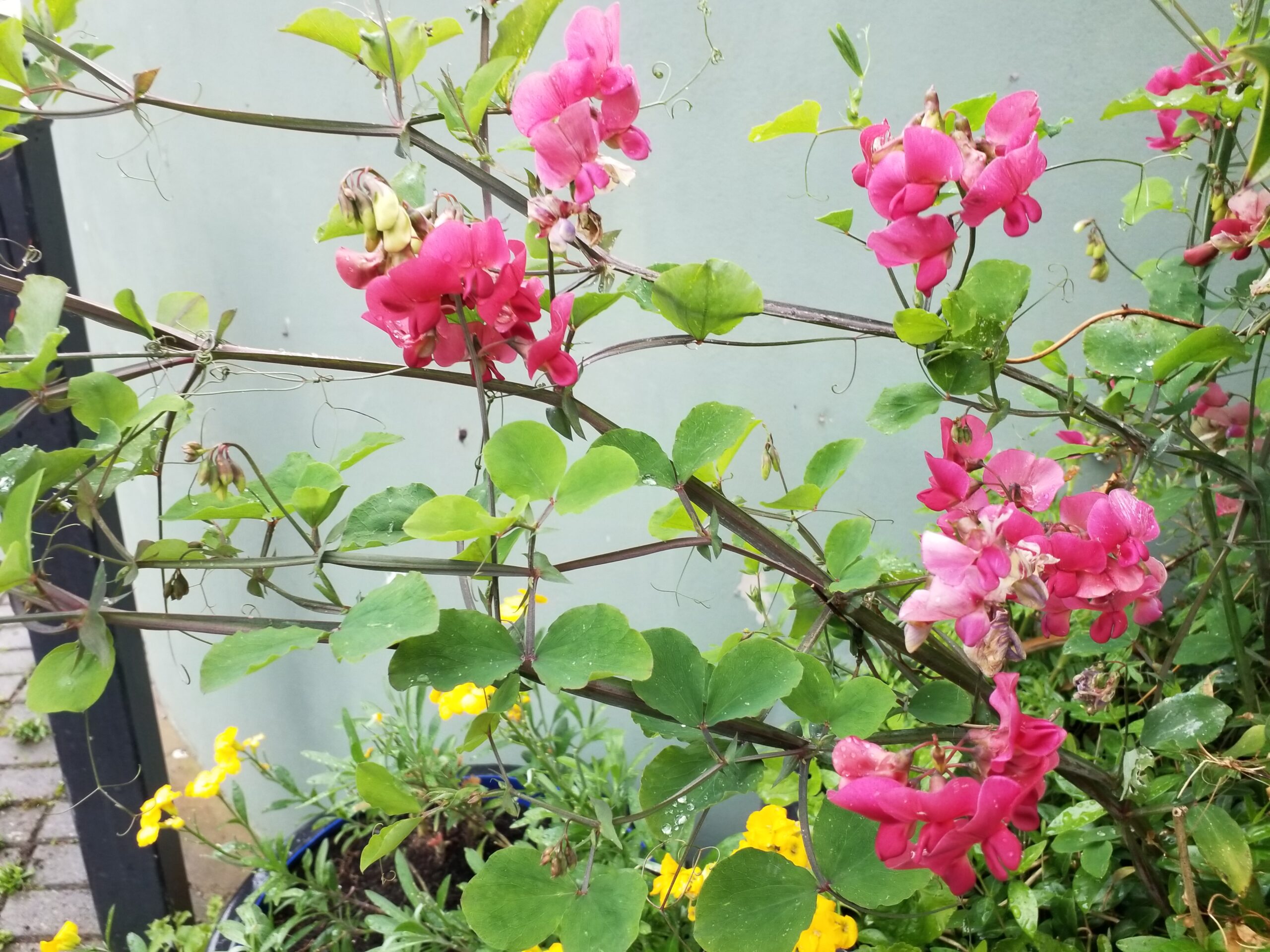
This was an experiment of a plant that I grew from seed a number of years ago. It germinated very sell and we tried it in several parts of the garden. All of the spots where it is doing well are relatively shady; indeed one is extremely shady and rarely gets and direct sun. The soils are quite wet in winter and they get no special protection. One of the plants grows in a large pot along with several other plant species. The books all say they need full sun, but they don’t, however I guess they may have more flowers in sun?
It hails from NE Turkey and The Caucasus Mountains, where it is hardy down to about -20C, so no problem anywhere in the UK.
The plant dies back in late summer and is completely herbaceous – that is, it dies right back to the ground , so is invisible in winter. In mid-spring it send up strong, fresh shoots of typical pea appearance. These come up in slightly different places each year, though they don’t move much. You need to spot them to make sure there are some sticks or other things for them to climb up, as they soon wrap their tendrils around anything – so can end up where you don’t want them!
By May and into June they produce their lovely brick-red flowers (OK they look pink in the photos, but aren’t). These aren’t scented, but are a really unusual colour and shine out in any border. Once established, this seems like a really reliable plant and has survived both cold and mild wet winters.
It is not too strong-growing, reaches about a metre and usually puts up several good stems. It barely spreads at all and seems pretty pest-free. Well, behaved, versatile, resilient, pest-free, unique colour – I definitely recommend it.