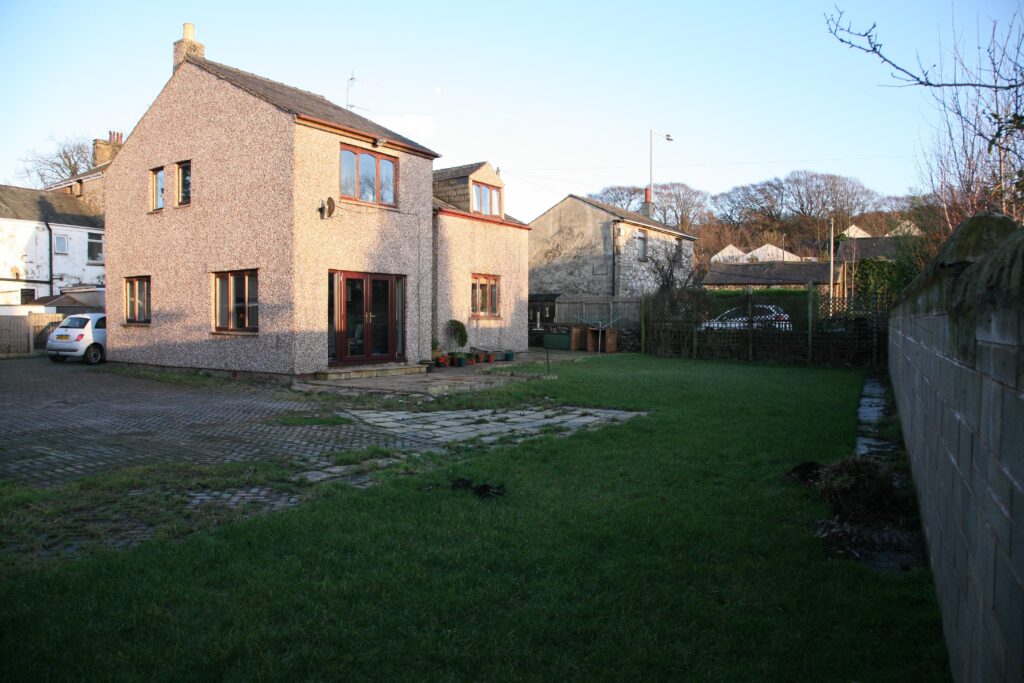
We moved into our house in December 2011 and the garden was a blank canvas. It had been an overgrown wilderness with waist-high weeds when we viewed in May. The owners had cut the weeds down and put a layer of budget turf over the top. There were absolutely no garden plants whatsoever, excepting one single honeysuckle bush on a fence.
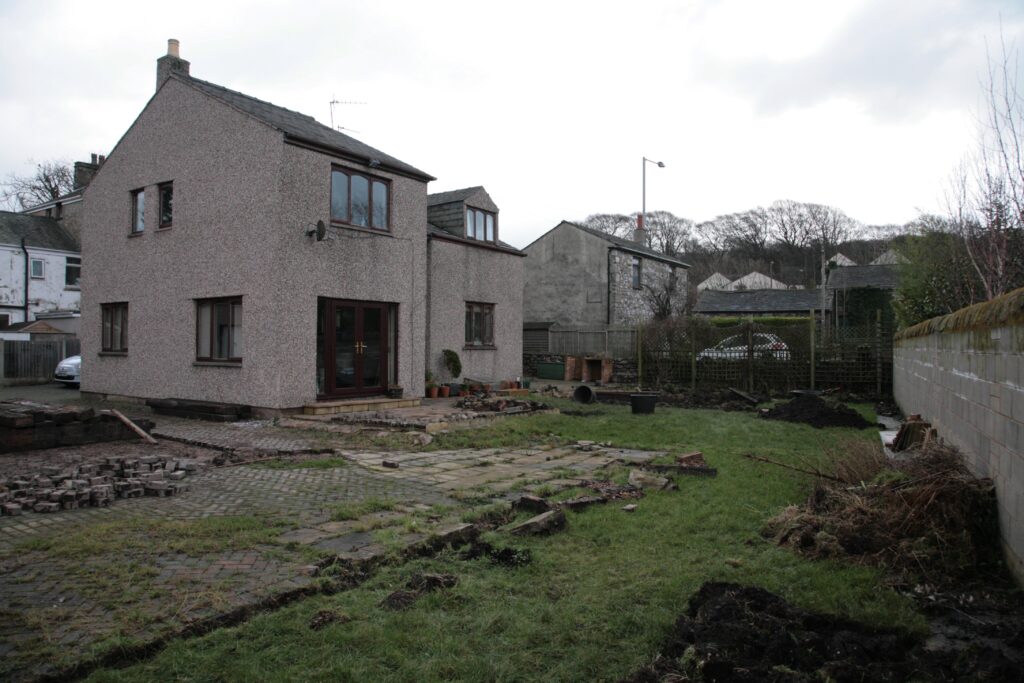
We had never had a decent-sized garden before and wanted to create something that would be good for growing food, good for wildlife and a relaxing place to enjoy flowers, plants, birds, insects and general wildlife. We decided where the pond would go, laid out markers for four raised beds for vegetables and started to dig up 1000s of block-pavers and tonnes of concrete. Here’s the view after about two months of work.
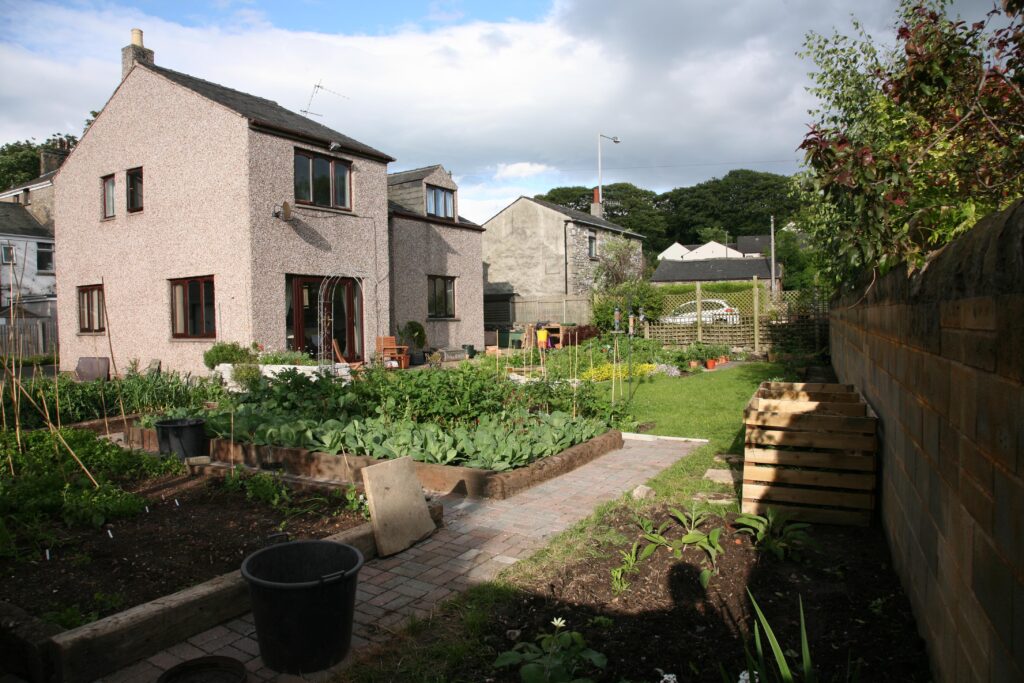
We brought lots of cuttings and seeds collected in our tiny garden in Bolton to get us started. By June 2012 some of the paths were laid, the raised beds built, using 24 old railway sleepers, compost bins built and our first vegetables planted and growing. It all looks very clean and tidy, but with no big shrubs or tall plants yet. We sent a ‘Before and After’ to the BBC Gardener’s World Magazine and it got chosen and published – with a £100 voucher as a prize! Our first award.
By 2013 – it has grown a little more.The bed at the front left has potatoes and in the foreground you can make out a few Blackberry leaves which provided our first berries later in the summer – yum!
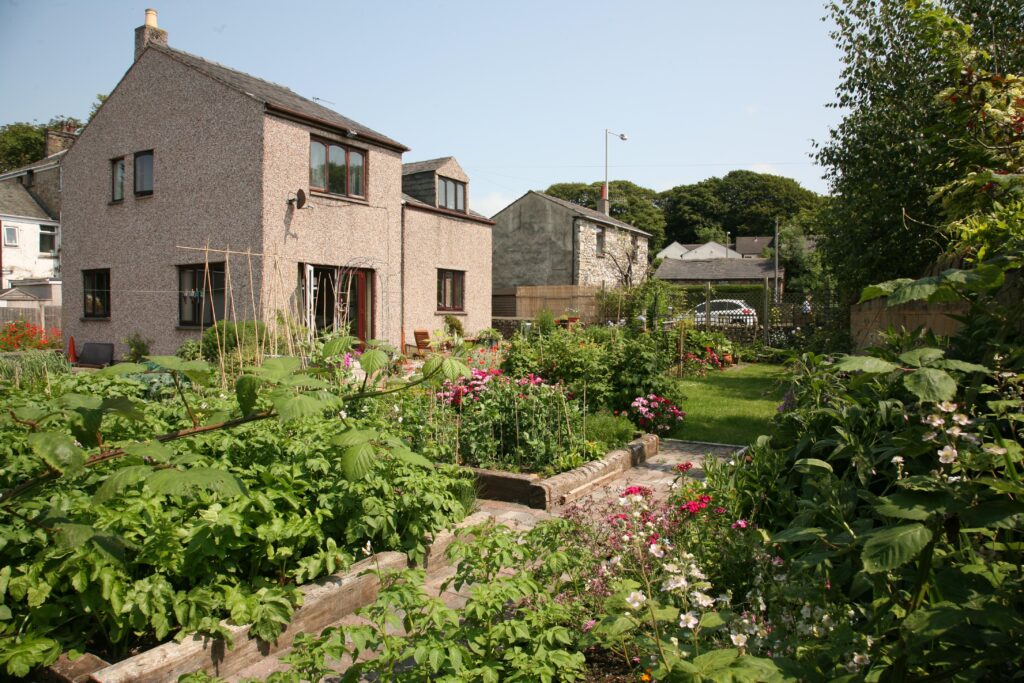
2014, and things are really getting going in a BIG way. Also, the greenhouse has arrived and been put up. It was a lot of work, but well worth it. Our first ever tomato crop is under way, although you can’t really see it. The potatoes are in front of the greenhouse this year – we rotate the crops to keep pests at bay, Comfrey is growing in front of the compost heaps (can be used as liquid manure) and you can see unripe blackberries on the right – looks like a promising crop. July 2015 was the first year that we won the Bolton le Sands village Larger Garden category of the Gardens competition – we were well pleased.
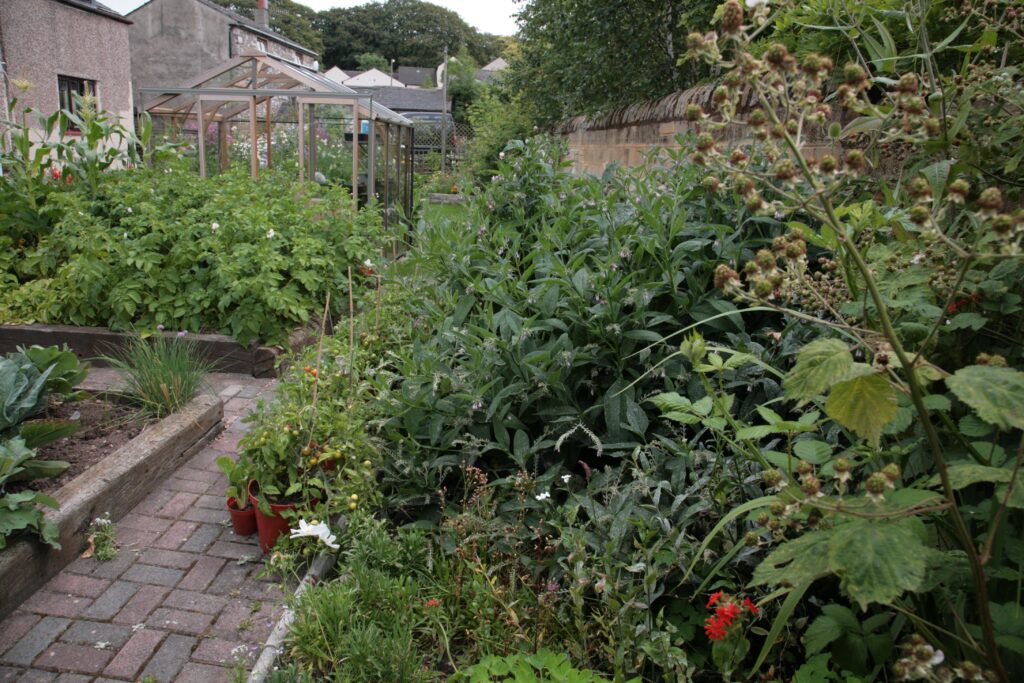
By 2016 we’re getting the hang of vegetable-growing – potatoes, cabbages, sprouts, parsnips, turnips, runner beans, peas, tomatoes, chillies, peppers, French beans, blackberries, raspberries, apples, gooseberries, lettuce, celery, kohl rabi, leeks, onions, swedes, garlic, shallots, rocket,winter squash, courgette, mibuna, mizuna, chives, parsley, sage, rosemary and thyme!
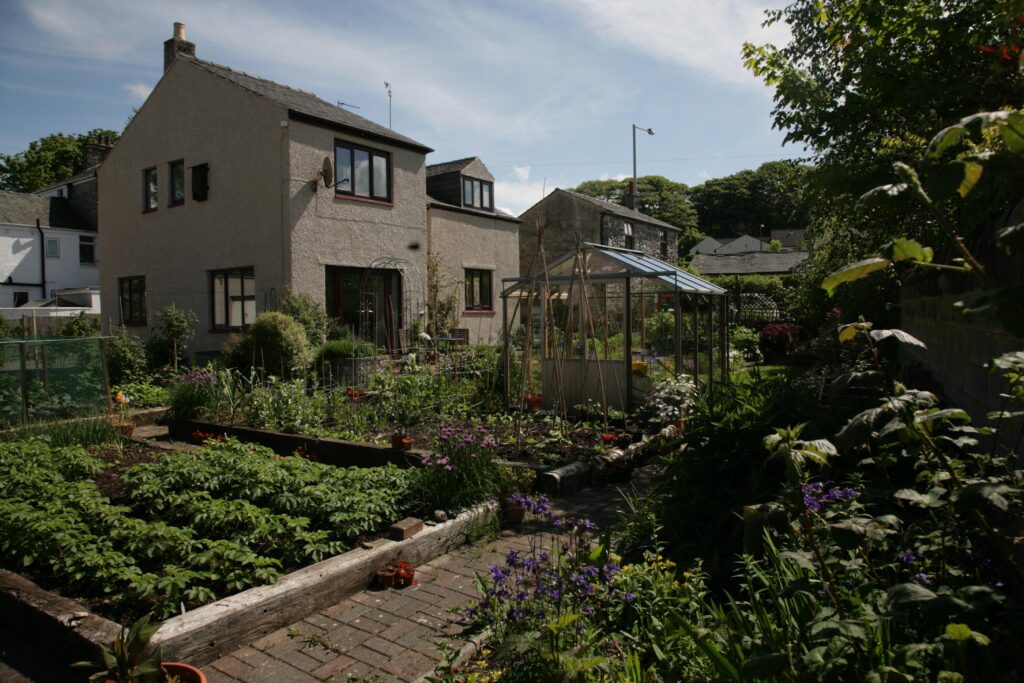
2018 was a good growing season and you can see the enormous pea plants on the left as well as massive tomato plants in the greenhouse. If you look closely you can see how big the Fremontodendron has got on the wall of the house.
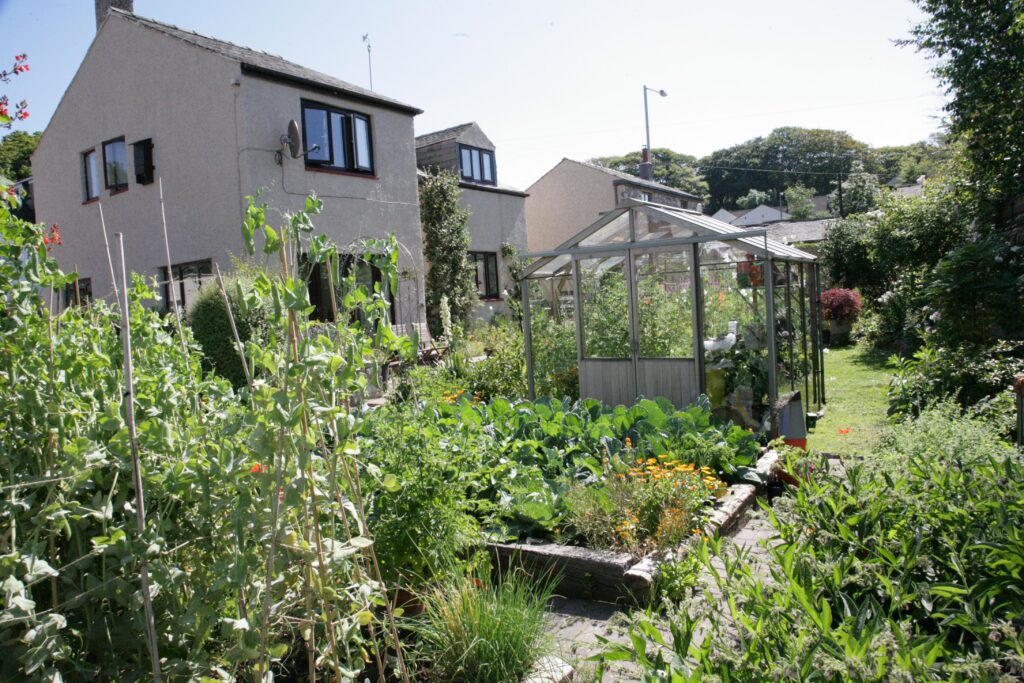
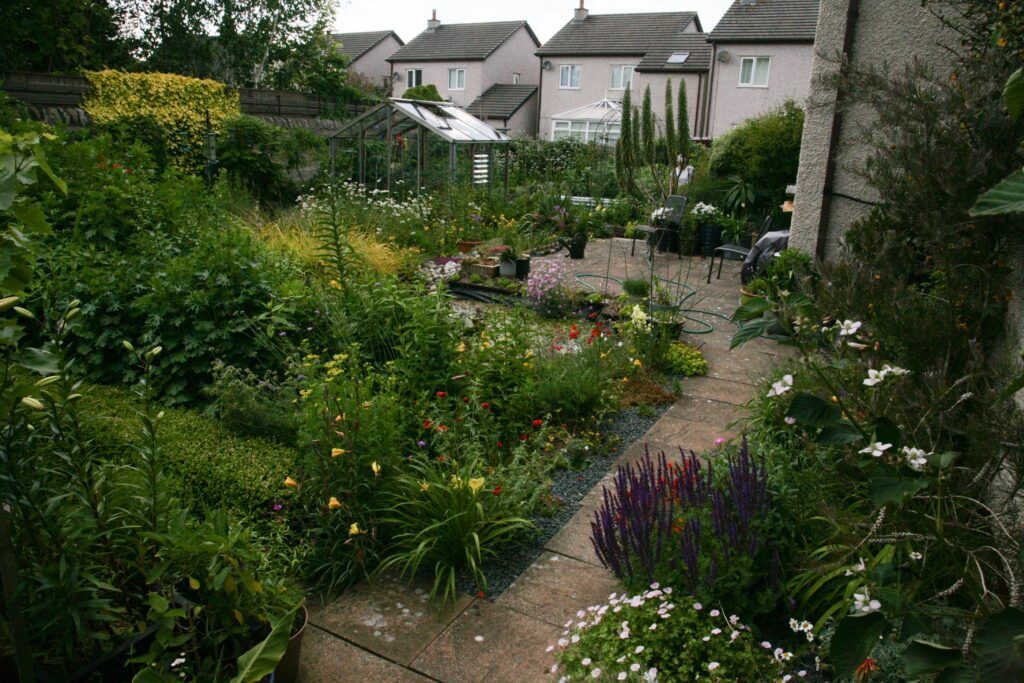
By 2019 there’s beginning to get a lot more structure as the shrubs and larger perennials take hold.
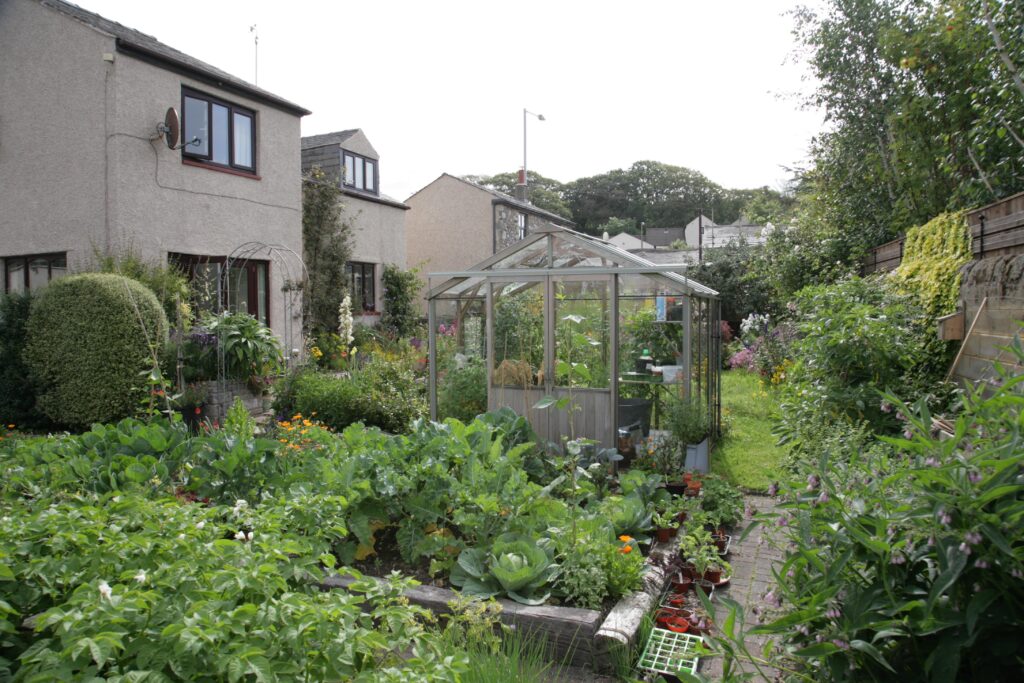
This year (2020) everything is pretty routine now. We now find we have to start controlling or pruning the more successful plants to stop them over-running the smaller or slower-growing ones.
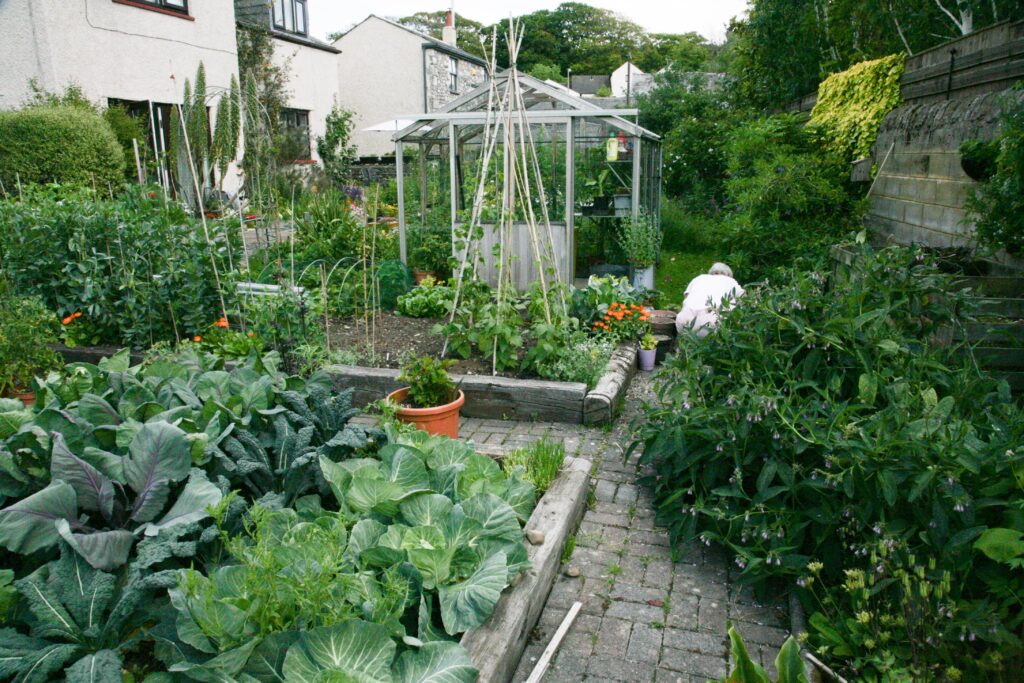
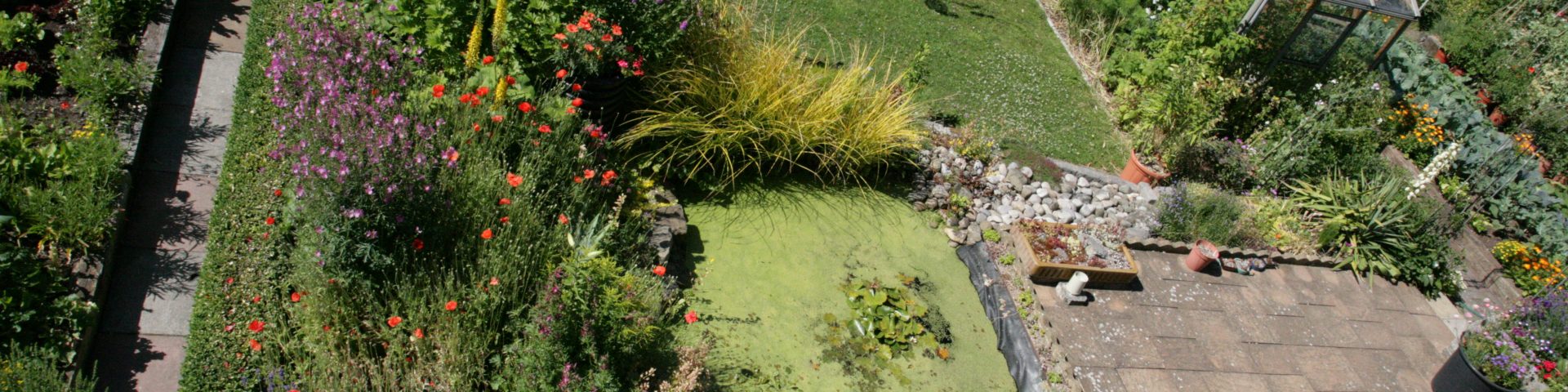
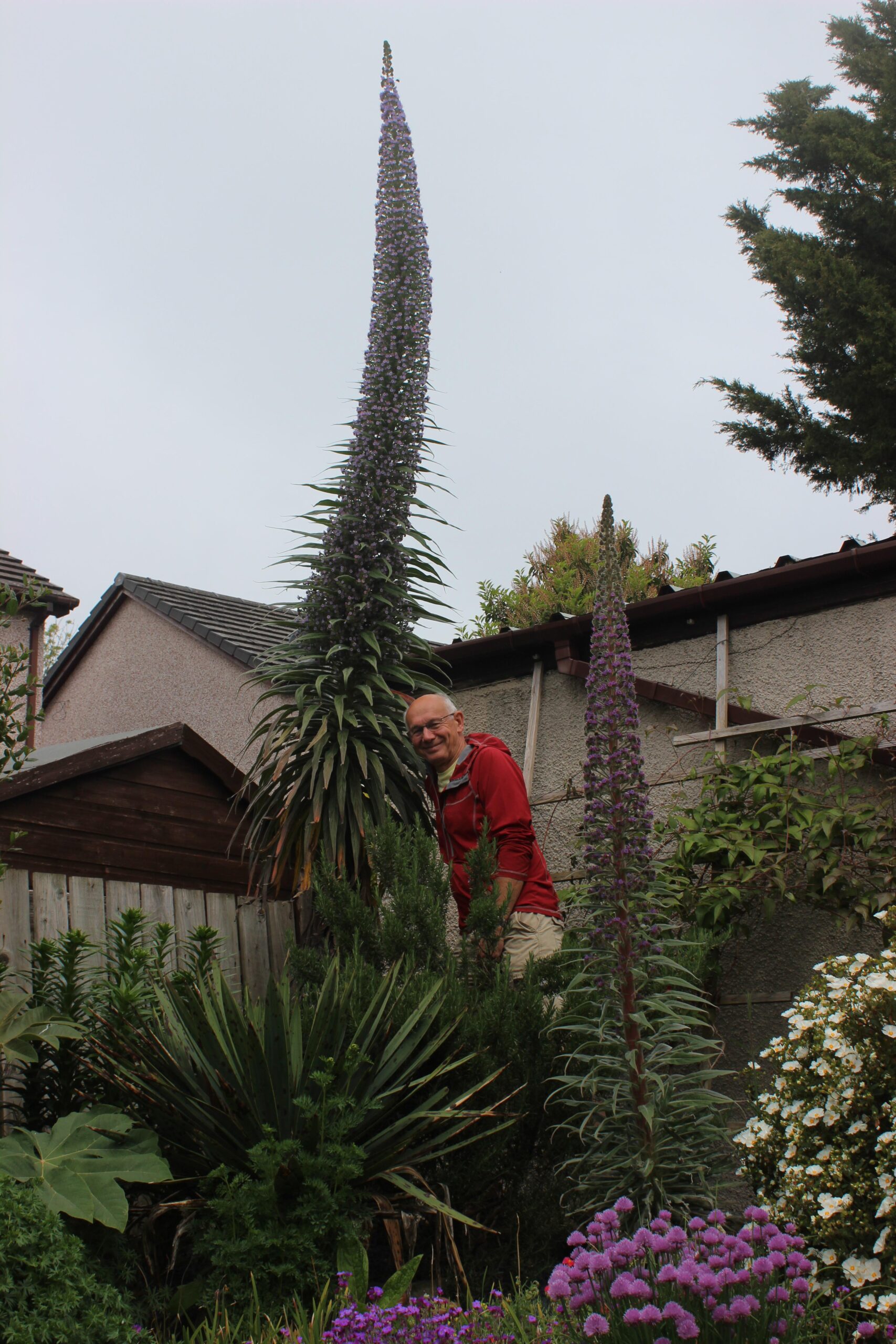
Below are a range of other pictures showing some of the garden’s features.
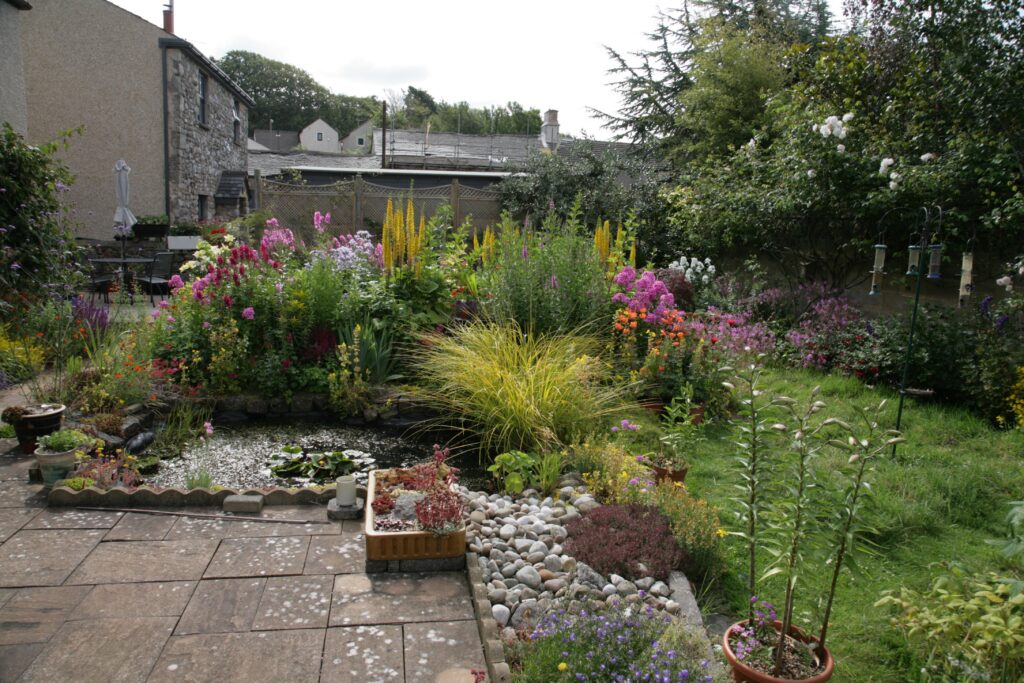
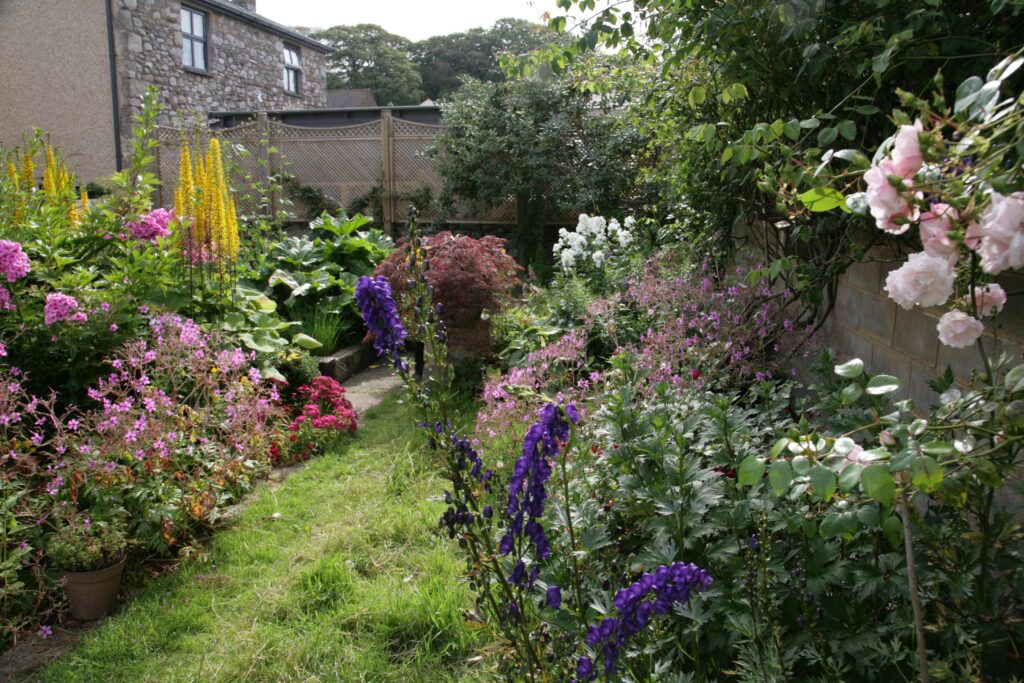
Gardening for wildlife, food and fun. See blogs under ‘Gardening’ for more details.
We use NO PEAT – and NO INSECTICIDES in our garden. The links will help to explain about why this is so important.